OVERVIEW OF DIRECT AND INDIRECT INTERACTIONS BETWEEN TEMPERATURE AND PLANKTON ACTIVITY.
OVERVIEW OF DIRECT AND INDIRECT INTERACTIONS BETWEEN TEMPERATURE AND PLANKTON ACTIVITY.
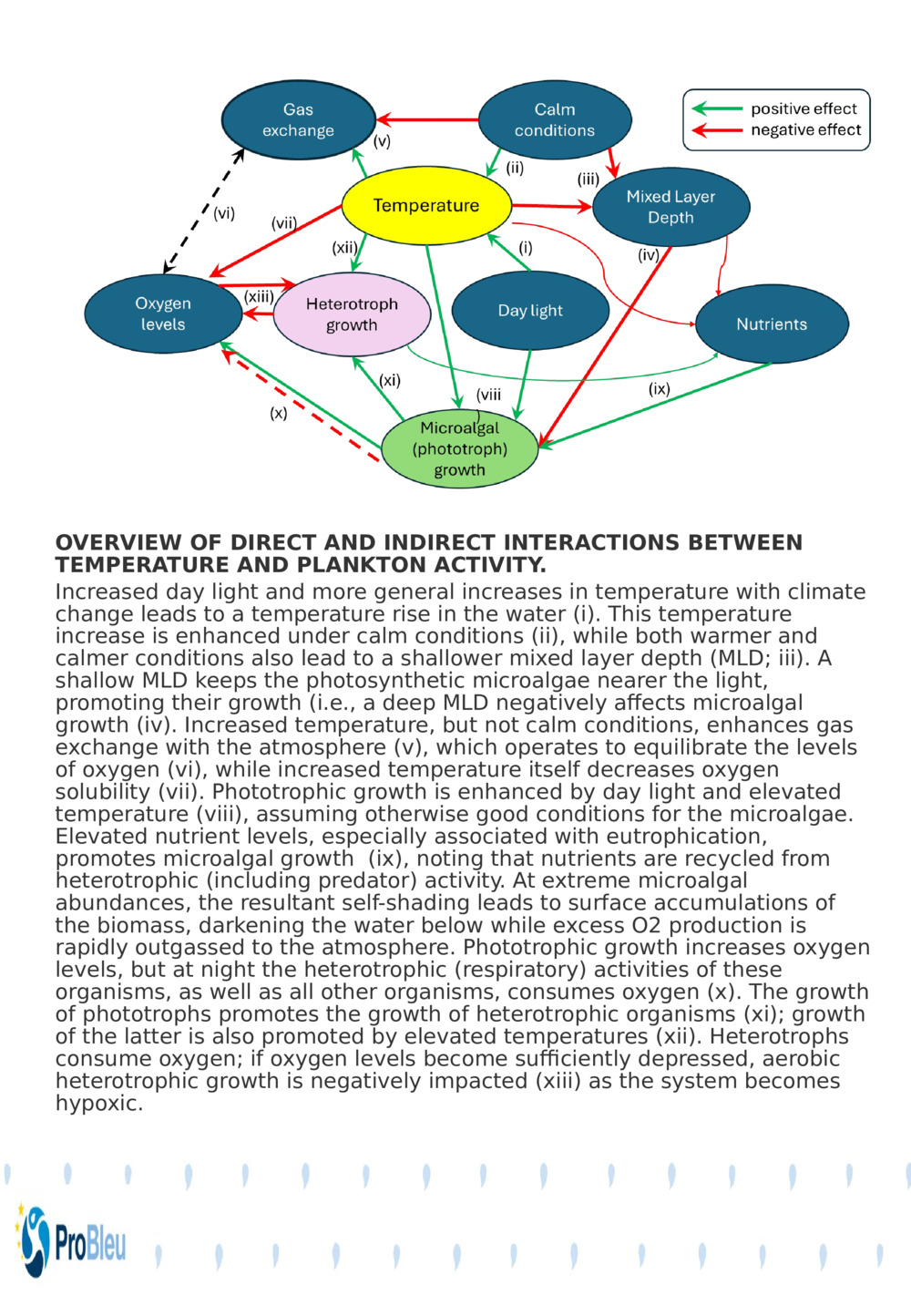
OVERVIEW OF DIRECT AND INDIRECT INTERACTIONS BETWEEN TEMPERATURE AND PLANKTON ACTIVITY. Increased day light and more general increases in temperature with climate change leads to a temperature rise in the water (i). This temperature increase is enhanced under calm conditions (ii), while both warmer and calmer conditions also lead to a shallower mixed layer depth (MLD; iii). A shallow MLD keeps the photosynthetic microalgae nearer the light, promoting their growth (i.e., a deep MLD negatively affects microalgal growth (iv). Increased temperature, but not calm conditions, enhances gas exchange with the atmosphere (v), which operates to equilibrate the levels of oxygen (vi), while increased temperature itself decreases oxygen solubility (vii). Phototrophic growth is enhanced by day light and elevated temperature (viii), assuming otherwise good conditions for the microalgae. Elevated nutrient levels, especially associated with eutrophication, promotes microalgal growth (ix), noting that nutrients are recycled from heterotrophic (including predator) activity. At extreme microalgal abundances, the resultant self-shading leads to surface accumulations of the biomass, darkening the water below while excess O2 production is rapidly outgassed to the atmosphere. Phototrophic growth increases oxygen levels, but at night the heterotrophic (respiratory) activities of these organisms, as well as all other organisms, consumes oxygen (x). The growth of phototrophs promotes the growth of heterotrophic organisms (xi); growth of the latter is also promoted by elevated temperatures (xii). Heterotrophs consume oxygen; if oxygen levels become sufficiently depressed, aerobic heterotrophic growth is negatively impacted (xiii) as the system becomes hypoxic.
Original Slide Deck: translation Test 1 - Kevin Notes
Topics: Ocean Temperature.
Suitable Ages: 10. 7.
Uploaded By: bod
Number of bundles using this content: 1
Licensed under CC BY 4.0
This content has been used in the following resource bundles: